Almost everyone who eats sushi regularly started with a california roll, and almost nobody stops to ask what is in one. It is usually the first thing ordered at a table where somebody is nervous, the safe pick for a friend not sure about raw fish yet. That reputation is earned, but it has also flattened the roll into a shrug. Ours is a specific build with specific parts, and it is worth knowing them before you decide whether to stay there or move on.
What Goes Into a California Roll Here
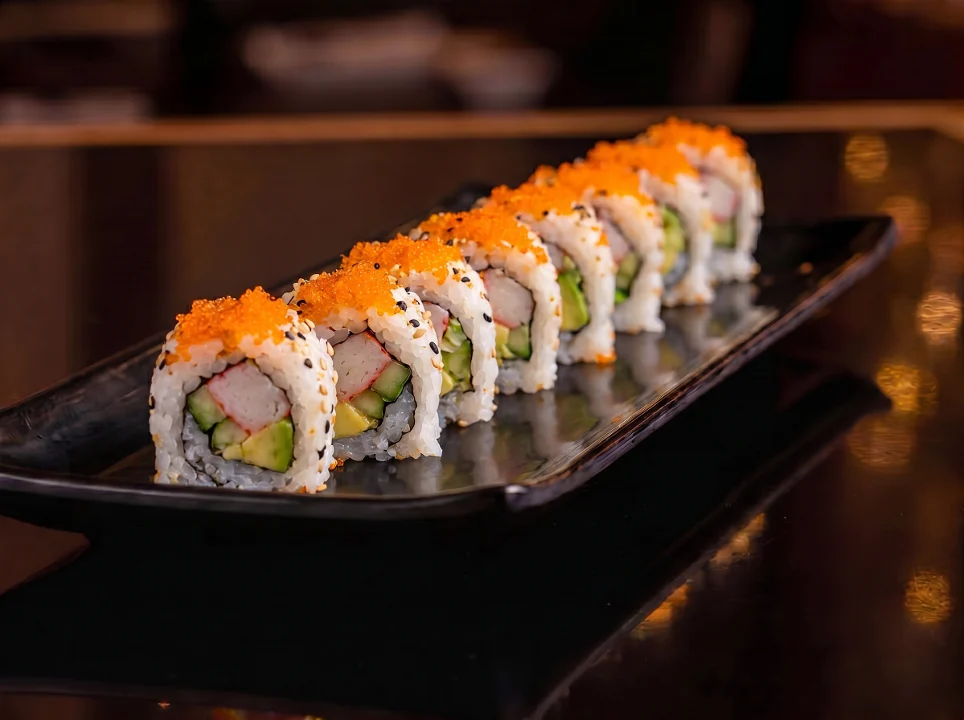
The build is rice, nori, kanikama, cucumber and avocado, finished with masago and sesame seeds, and it arrives as four pieces. Kanikama is the ingredient most people cannot name. It is imitation crab, made from white fish shaped and seasoned to read as crab meat, and it is the reason the roll behaves the way it does. Masago is capelin roe, the fine orange beads on the outside that give each piece a faint salt-pop.
The construction matters as much as the filling. A california roll is uramaki, which means the rice goes on the outside and the nori wraps the filling inside. That is a reversal of the traditional order, and it exists because the seaweed on the outside put people off when the style first traveled. Rice out, seaweed in, and suddenly the roll stopped looking foreign.
One thing worth stating plainly: our menu tags every item that carries raw or undercooked fish, and the california roll does not carry that tag. If that is what you are checking for, it belongs on the same shortlist as our other cooked sushi rolls. As the site notes, it remains the guest’s responsibility to tell the server about any allergy.
The Same Roll, Rolled by Hand
The temaki version is the same idea in a different shape. A California Temaki is rice wrapped in nori with kanikama and avocado, cut loose from the cylinder and folded into a cone you eat with your hands rather than chopsticks. No cucumber, no masago, and a completely different texture, because a hand roll is assembled to be eaten immediately while the nori is still crisp.
If you are working out which form suits the table better, the difference between a cut roll and a cooked sushi rolls california hand roll comes down to timing. A cut roll travels across a shared table. A temaki wants to be eaten by the person who was handed it, right then.
Where the California Roll Leads
Treat it as a starting point and the menu opens up in a straight line from it. The Philly Kanikama Roll keeps the kanikama and swaps in cream cheese. The Cucumber & Avocado Roll strips it back to the two vegetables and is one of the few items carrying the Vegan Food tag. The Hosomaki lets you choose a single filling, kanikama among the options, for the plainest version of the idea.
The most interesting move is on the Premium tier. The Lava Roll takes a fried california roll, avocado, cucumber and kanikama, then tops it with spicy shrimp and more kanikama, green onions, eel sauce and spicy mayo. Same foundation, taken somewhere loud. The full list of what the kitchen builds sits on the Menu, and the roll section alone runs to 22 options.
Ordering a California Roll Without Counting
Every one of these is made to order rather than pulled from a case, which changes what an unlimited menu means in practice. Nothing sits waiting. You order four pieces, they are rolled, they arrive, and you order again if you want them again. Dessert is part of the same format rather than a separate decision at the end.
There is one rate before 4:00 PM and another after it, and a Premium tier above the standard one at both services, with current figures printed on the menu pages. Offers with their own conditions are listed on Specials, including 20% off for active and retired military with official ID on the All You Can Eat menu, and one child up to 10 years old eating free on Tuesdays and Wednesdays with 2 adult All You Can Eat.
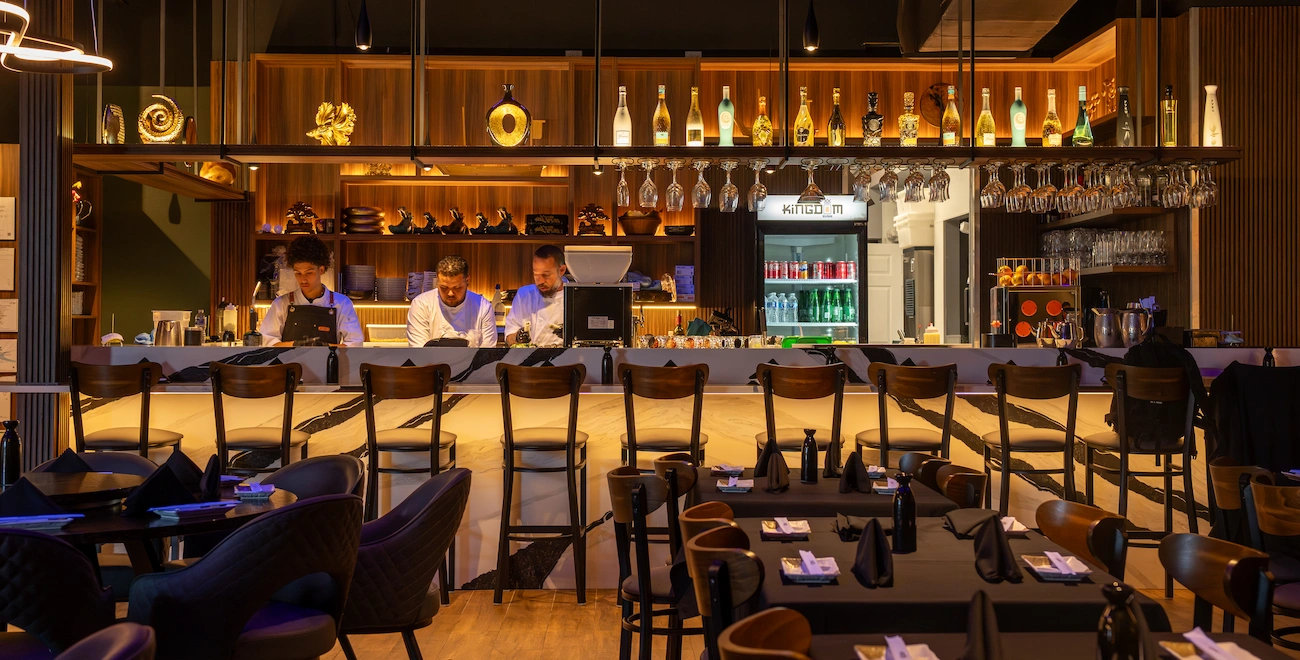
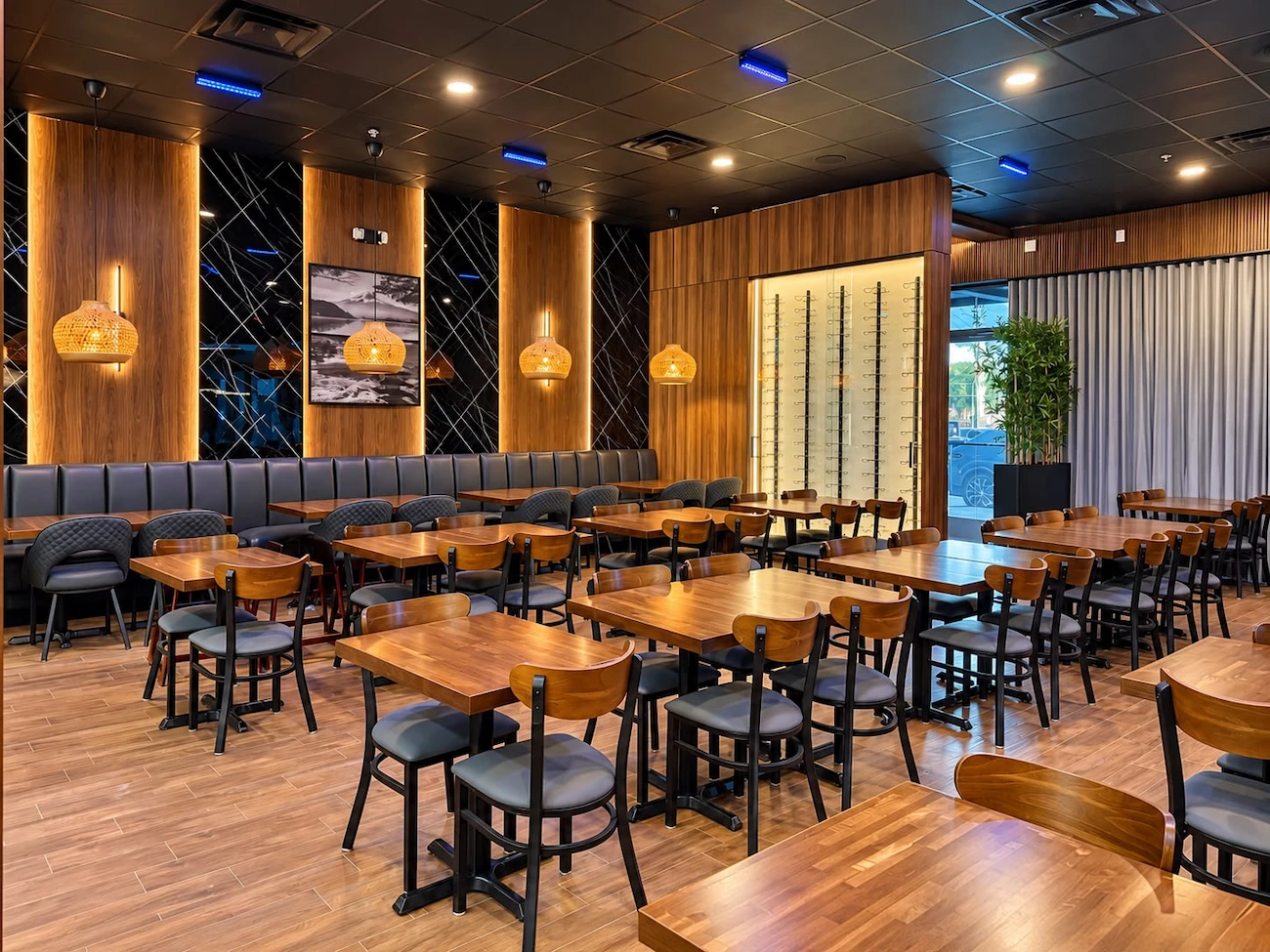
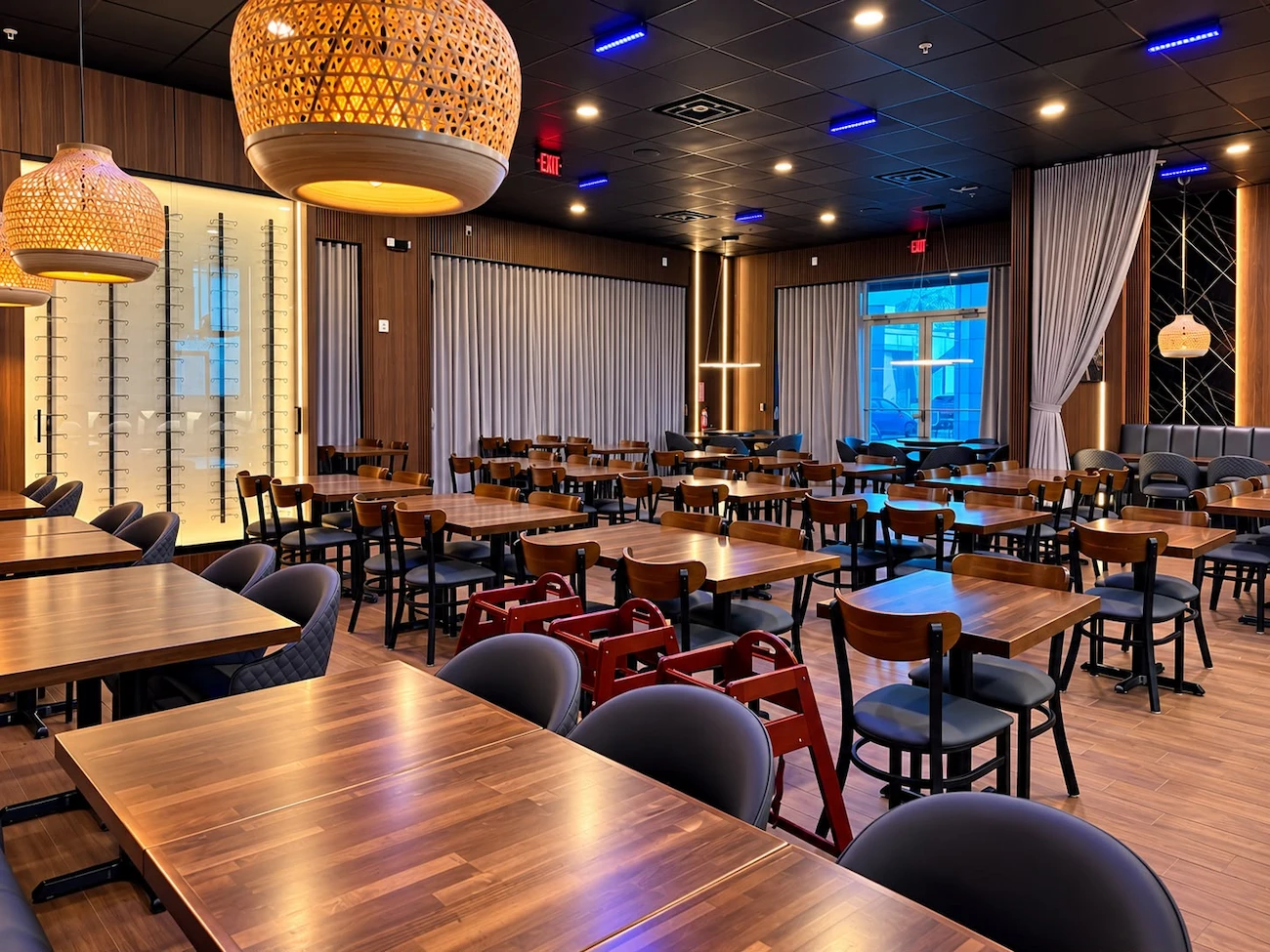
The same menu runs at every room, so the roll is the roll whether you are at 11739 Narcoossee Rd, Suite 100A in Lake Nona, 1391 Citrus Tower Blvd in Clermont, or 1239 S Federal Hwy in Fort Lauderdale. Doors open at noon and close at 11:00 PM at most locations.
Book a table through Reservations, send it to the door with Sushi Delivery, or order through the Kingdom Sushi App, which carries Royal Rewards points, secret menu items and a standing $10 off when you spend $100. Start with the california roll if that is where you are comfortable. Just know it was built to be a door, not a room.
Frequently Asked Questions
What is in a California roll?
Ours is rice, nori, kanikama, cucumber and avocado, finished with masago and sesame seeds, served as four pieces. Kanikama is imitation crab made from white fish, and masago is capelin roe. It is built as uramaki, with the rice on the outside and the nori wrapped around the filling.
Does a California roll contain raw fish?
Our menu puts a “Raw or Undercooked Food” tag on every item that does, and the California Roll does not carry it. Kanikama is imitation crab rather than raw crab meat. The site also notes that it remains the guest’s responsibility to inform the server about any food allergies, so flag anything specific when you order.
Is there a hand-roll version of the California roll?
Yes. The California Temaki is rice wrapped in nori with kanikama and avocado, folded into a cone rather than cut into pieces. It leaves out the cucumber and masago, and it is best eaten straight away while the nori is still crisp.
Can I order California rolls on the all-you-can-eat menu?
Yes, and every piece is rolled when you order it rather than taken from a case. The à la carte menu is available too if one plate suits the night better. Both sit on the Menu page, along with the 22 rolls in the standard section and the Premium tier above it.